The Role of AI in Competitive Gaming
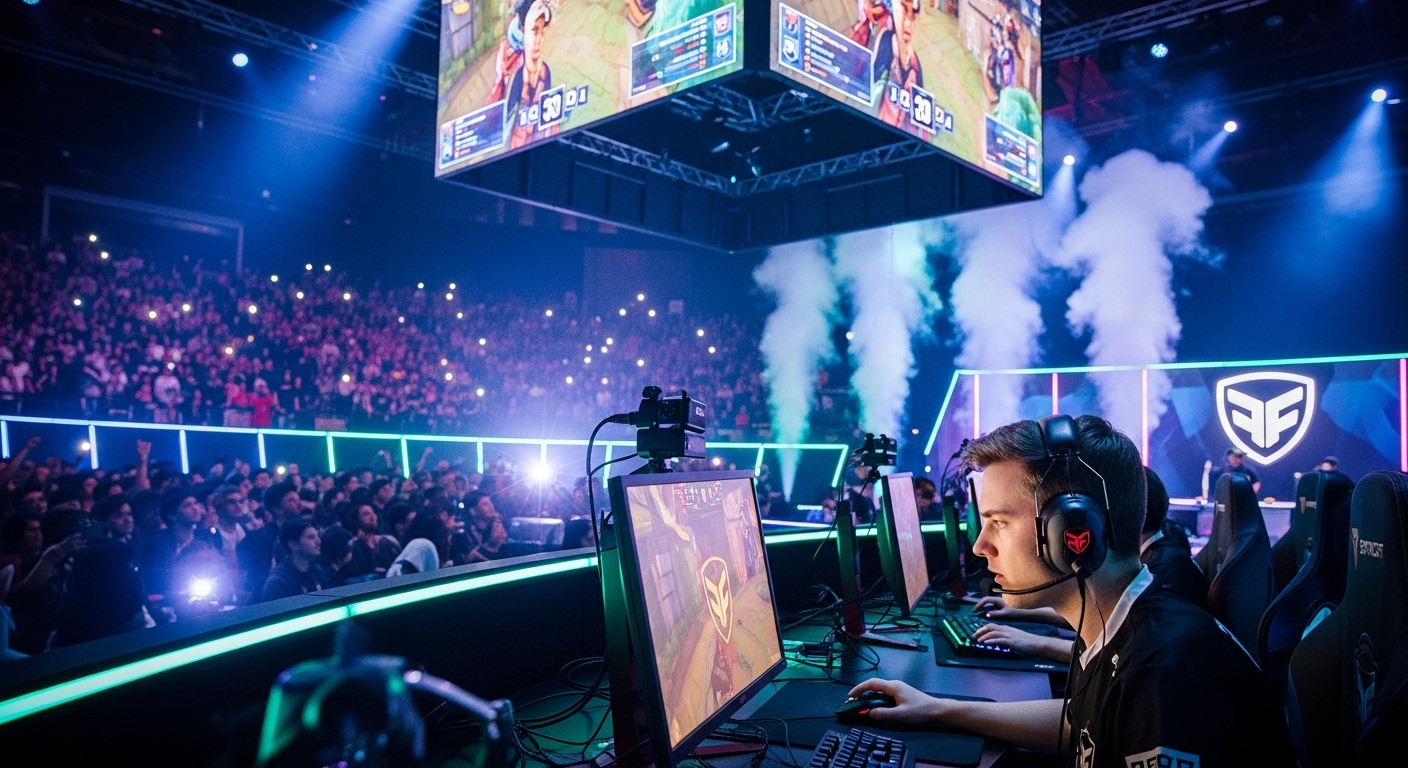
Competitive gaming, commonly referred to as esports, has evolved from a niche pastime into a global phenomenon. Millions of players, teams, and fans participate in or follow competitive gaming across the world. Central to the growth and sophistication of esports is the role of technology, particularly Artificial Intelligence (AI). AI is transforming how players train, how teams strategize, and how games themselves are designed, creating an entirely new layer of competition. In this blog, we will explore how AI is shaping competitive gaming, the benefits it brings, the challenges it introduces, and what the future may hold.
Understanding AI in the Context of Gaming
Artificial Intelligence, at its core, refers to machines and software capable of performing tasks that typically require human intelligence. This can include problem-solving, decision-making, learning from experience, and even understanding natural language. In the context of gaming, AI manifests in several ways: as in-game opponents, analytics tools for players and coaches, or as predictive systems that influence game design and esports strategies.
Historically, AI in gaming was simple. Classic games like chess and early video games relied on rule-based systems that could follow programmed behaviors. These systems were predictable, and while challenging, they lacked adaptability. Today, AI has evolved through machine learning, neural networks, and reinforcement learning, allowing systems to learn and adapt in real time. This sophistication has profound implications for competitive gaming.
AI-Powered Training for Competitive Gamers
One of the most significant ways AI impacts competitive gaming is through player training. Professional esports players require not only technical skills but also strategic thinking, quick reflexes, and the ability to predict opponents’ moves. AI provides powerful tools to enhance these skills.
AI training tools can analyze gameplay data to identify patterns in both the player’s performance and the tendencies of opponents. For example, an AI system can track a player’s reaction times, accuracy, decision-making under pressure, and even psychological tendencies such as risk aversion or aggression. By analyzing these metrics, AI can create personalized training programs, highlighting areas for improvement that human coaches might overlook.
Reinforcement learning AI can also simulate complex opponents that adapt to a player’s style. Unlike traditional bots, which follow fixed strategies, these AI opponents learn from the player’s actions and respond dynamically. This creates a more realistic training environment, preparing players for high-level competition where human opponents are unpredictable.
Moreover, AI can assist in strategic decision-making. In team-based games, AI can analyze past matches to suggest optimal strategies, highlight weaknesses in opponents’ play, and even simulate possible outcomes based on different tactical choices. This gives teams a competitive edge and allows players to focus on execution rather than guesswork.
Enhancing Game Design and Balance
AI does not only support players; it is also transforming the way games are developed. Game developers face the ongoing challenge of balancing games to ensure fairness and competitiveness. AI offers tools that can automate and enhance this process.
Using AI, developers can simulate millions of matches between virtual players to test game balance. This allows them to identify overpowered characters, weapons, or strategies that might dominate competitive play. AI can also predict how changes to game mechanics will affect the meta-game, helping developers maintain a fair and engaging environment.
Another significant contribution of AI in game design is procedural content generation. AI can create maps, levels, and in-game scenarios that are not only balanced but also unpredictable. This keeps competitive gaming fresh, forcing players to adapt and innovate rather than relying solely on memorized patterns. By constantly introducing new challenges, AI-driven design encourages creativity and skill development among competitive players.
AI in Match Analysis and Scouting
Esports organizations increasingly rely on AI to analyze matches and scout talent. Advanced analytics platforms can break down every aspect of gameplay, from individual performance metrics to team coordination. AI can detect subtle patterns that human observers might miss, such as recurring mistakes, timing issues, or preferred tactics under pressure.
For teams, AI-powered scouting systems are invaluable. They can evaluate potential recruits by analyzing thousands of hours of gameplay data, ranking players based on performance, consistency, and potential for growth. This reduces the risk associated with recruiting new talent and ensures that teams can build competitive rosters with higher precision.
In live matches, AI can also assist commentators and analysts by providing real-time insights. For example, AI can predict likely outcomes based on in-game events, highlight key turning points, or provide statistical context for viewers. This enhances the audience experience and deepens engagement with the esports ecosystem.
AI-Driven Competitive Integrity
One of the challenges in esports is maintaining competitive integrity. Cheating, collusion, and unfair advantages can undermine trust in competitions. AI has emerged as a vital tool for monitoring and enforcing fairness.
Anti-cheat systems powered by AI can detect abnormal behavior patterns, such as superhuman reaction times, impossible accuracy, or unusual movement patterns. Unlike traditional anti-cheat measures that rely on fixed rules, AI systems continuously learn from new data, improving their ability to detect emerging cheating methods.
Additionally, AI can be used to monitor communication and in-game behavior for signs of collusion or match-fixing. By analyzing patterns across multiple matches, AI can flag suspicious activity that warrants human investigation. This not only protects the integrity of competitions but also enhances the credibility of esports as a professional sport.
AI in Spectator Experience and Engagement
Esports is not only about competition; it is also a spectator sport. Fans around the world watch tournaments, follow their favorite players, and engage in discussions about strategy. AI is enhancing this experience in multiple ways.
AI-powered cameras and broadcasting systems can automatically track action in real time, highlighting key moments without the need for manual operation. Virtual assistants can provide live stats, predictive analyses, and even suggest optimal camera angles based on audience interest.
Furthermore, AI can personalize the spectator experience. By analyzing viewer behavior and preferences, AI systems can recommend matches, highlight reels, or specific player performances. This level of personalization enhances engagement, making esports more accessible and enjoyable for casual viewers while still satisfying hardcore fans.
AI can also generate content such as automated match summaries, highlight reels, or even narrative-driven recaps that enhance the storytelling aspect of esports. This makes competitions more exciting, deepening fan loyalty and expanding the global reach of esports events.
Ethical Considerations and Challenges
While AI offers numerous benefits, its integration into competitive gaming is not without challenges. One major concern is fairness. As AI tools become more sophisticated, there is a risk that access to these technologies may be uneven across teams and players, creating an unlevel playing field. Ensuring equitable access to AI-driven training, analytics, and strategy tools is essential to maintain fair competition.
Another challenge is the potential loss of human creativity and intuition. Competitive gaming has always celebrated human skill, strategy, and adaptability. If AI begins to dominate training and strategic planning, there is a risk that gameplay could become overly optimized, predictable, or homogenized. Balancing AI support with the preservation of human ingenuity is a critical consideration for the future of esports.
Data privacy is another significant concern. AI systems rely on vast amounts of player data, including performance metrics, behavioral patterns, and even biometric information. Organizations must handle this data responsibly, ensuring that privacy and security standards are met. Misuse or mishandling of data could damage trust and harm the esports community.
The Future of AI in Competitive Gaming
The future of AI in esports is both exciting and complex. Advances in machine learning, natural language processing, and computer vision will continue to expand AI’s capabilities in training, analytics, game design, and audience engagement.
One potential development is the rise of AI-assisted players in mixed competitions. While AI-driven training is already common, future systems may be capable of participating directly in matches alongside humans, either as teammates or challengers. This could redefine the nature of competitive gaming, creating hybrid competitions that test both human skill and the ability to collaborate with intelligent systems.
Another area of growth is predictive analytics. AI may be able to anticipate shifts in the competitive meta, identify emerging strategies before they become mainstream, and even simulate long-term tournament outcomes. This could revolutionize how teams prepare for competitions and how fans engage with esports narratives.
Virtual reality (VR) and augmented reality (AR) esports will also benefit from AI integration. AI can control dynamic environments, adapt challenges in real time, and create immersive experiences that push the boundaries of traditional gaming. Competitive VR esports could become a new frontier where AI plays a central role in shaping gameplay and strategy.
Finally, the ethical and regulatory framework surrounding AI in esports will evolve. Organizations, developers, and governing bodies will need to establish clear guidelines to ensure fairness, protect player data, and maintain the integrity of competition. Balancing innovation with responsibility will be crucial as AI becomes increasingly embedded in the esports ecosystem.
Conclusion
Artificial Intelligence is transforming competitive gaming in profound ways. From enhancing player training and strategic analysis to improving game design, audience engagement, and competitive integrity, AI has become an indispensable part of the esports landscape. The integration of AI offers enormous opportunities for growth, skill development, and entertainment, but it also raises ethical, regulatory, and creative challenges that must be carefully managed.
As AI continues to evolve, its role in competitive gaming will expand, pushing the boundaries of what is possible. Players, teams, developers, and fans alike will need to embrace these changes while maintaining the human elements of skill, creativity, and sportsmanship that make esports compelling. The future of competitive gaming is undeniably intertwined with AI, promising a new era where technology and human talent combine to create extraordinary experiences both on and off the virtual battlefield.